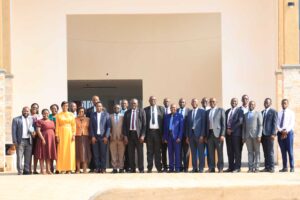
A seminar on the implementation of Competency-Based Curriculum (CBC) brought together in-service lecturers in a day packed with learning, reflection, and renewed commitment to teaching excellence.
The air was one of purpose and preparation as lecturers filed in for a seminar that would set the tone for the upcoming May 2026 academic session. Organized under the theme “Implementation of Course Modules” the day was designed not just to inform, but to equip.
Registration was handled smoothly by the Quality Assurance Office, led by Mrs. Kayongo, ensuring every participant was welcomed and accounted for before proceedings began. Dr. Alexander Mwita, Dean of the School of Theology, opened the session with prayer, grounding the day in both purpose and spirit.
The welcome remarks were delivered by Dr. Rosette Kabuye, Deputy Vice Chancellor for Academics, who set a warm but serious tone, reminding the gathering that the work ahead matters deeply, both for the institution and for the students they serve.
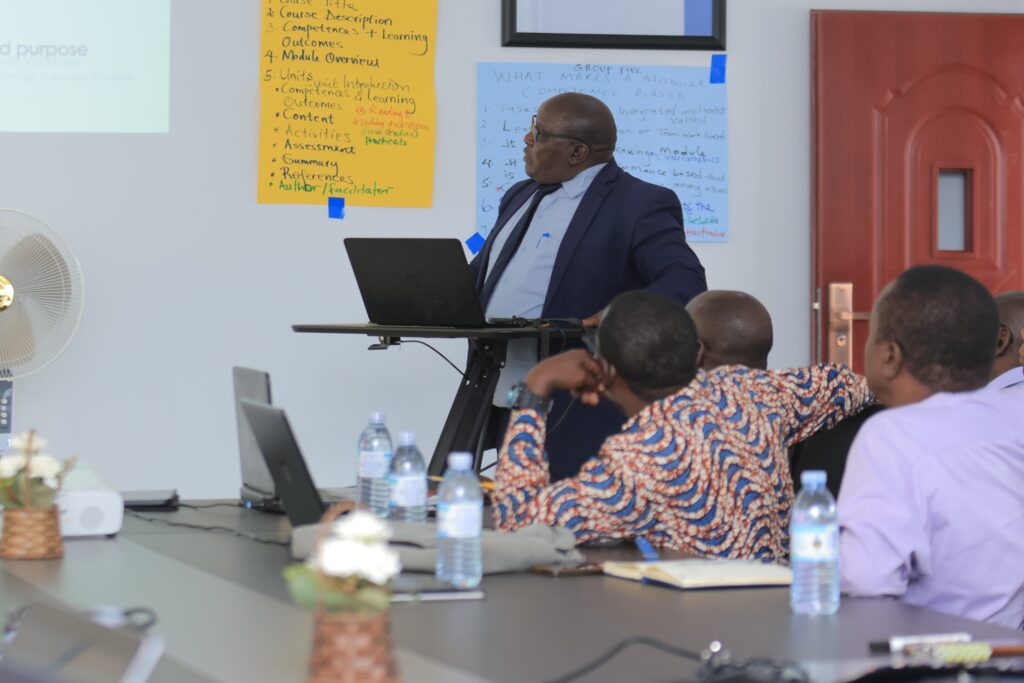
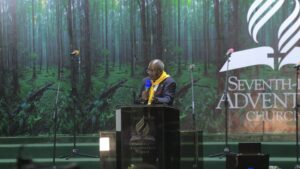
Dr. Geofrey Grace Bakaira Presenting
Learning from the Experts
The first presentation of the day came from Dr. Geoffrey Grace Bakaira of Kyambogo University, a holder of a Doctor of Philosophy Degree in Assessment and Evaluation in Teacher Education, a Master’s Degree in Education, in the field of curriculum; specializing in Assessment, Evaluation and Supervision of Instruction; and a trained, specialist and professional Graduate Tutor in Evaluation and Supervision, with a Bachelor in Education Degree of Makerere University. With clarity and depth, Dr. Bakaira walked participants through the process of constructing a CBC course module, breaking down what can often feel like a complex task into something practical and achievable. Lecturers listened intently, many taking notes as the pieces of the curriculum puzzle began to fall into place.
Following this, Dr. Marion Kibuuka took the floor for the second presentation, focusing on Module Delivery Expectations and Teaching Strategies. Drawing on his rich background, which includes a doctorate in Evidence-Based Health Care from the University of Oxford, experience as a Registered Midwife and General Nurse, and current work as a Clinical Midwife Specialist, Dr. Kibuuka brought both academic depth and real-world insight to his session. His presentation challenged lecturers to think not just about what they teach, but how they teach it.
From Theory to Practice
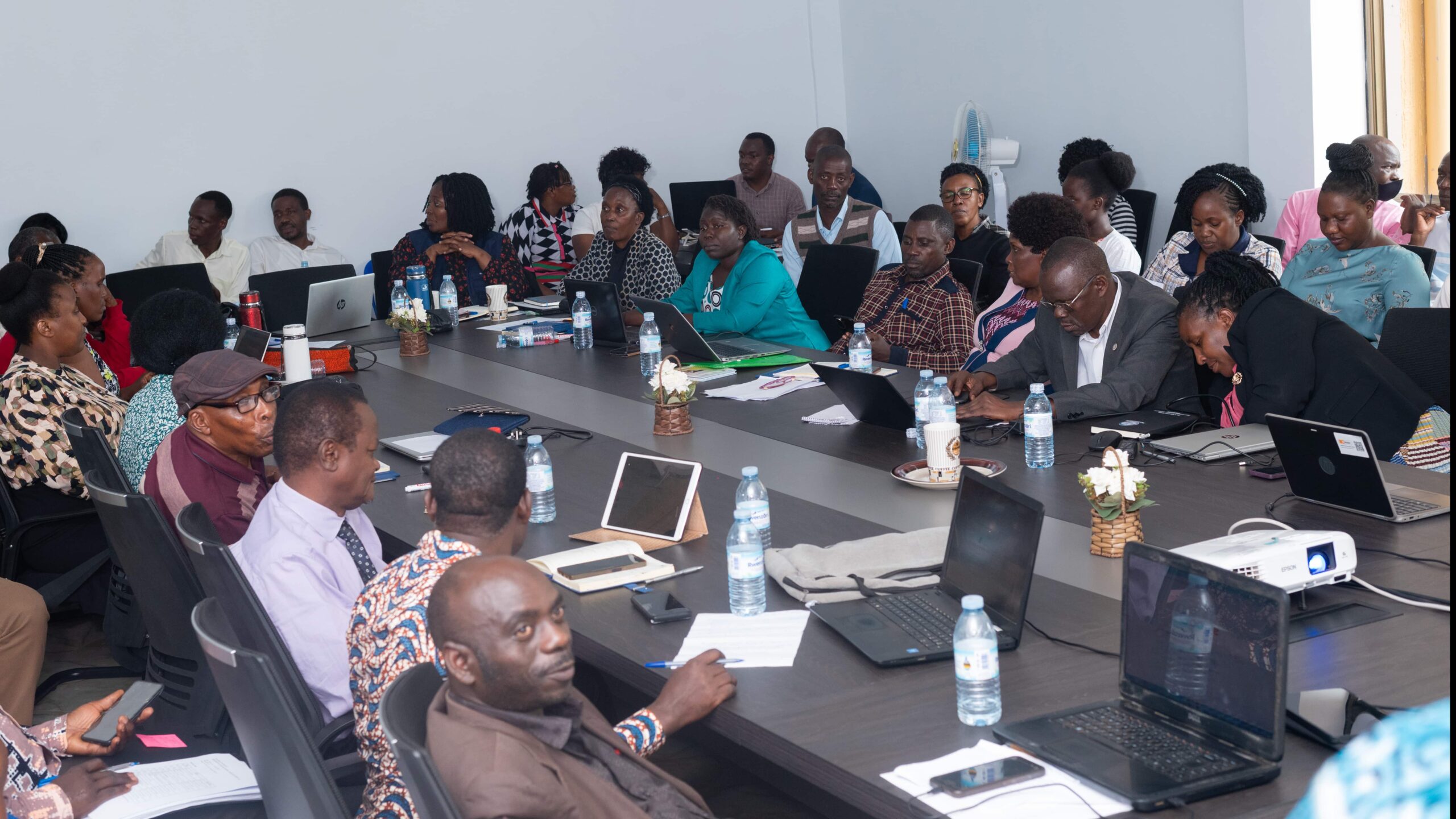
The afternoon shifted the energy from listening to doing. Lecturers were placed into groups and tasked with actually constructing a course module, putting the morning’s lessons to the test. The group work was facilitated by the Quality Assurance Office, creating a collaborative atmosphere where ideas were exchanged freely and questions were welcomed.
Once the groups had completed their work, Mr. Samuel Hafashimana, Head of Department for Education, stepped in to assess and evaluate the group presentations, offering structured feedback that helped participants see both their strengths and the areas still needing refinement.
Standards, Discussion, and a Charge to Move Forward
Mr. Okoth Ronald, who heads Quality Assurance Programs and Accreditation, then presented on quality assurance and compliance requirements, a crucial reminder that excellence in teaching must also meet the standards that govern academic integrity and institutional credibility. His session opened the floor to open discussion, where lecturers voiced questions, shared concerns, and engaged in the kind of honest conversation that moves institutions forward.
The day was drawn to a close by Mrs. Justine Lwanga, Academic Registrar, who delivered the resolutions and closing remarks. Her words were both a summary and a send-off, capturing the spirit of everything that had been shared and challenging every lecturer in the room to carry it back into their classrooms. A closing prayer sealed the day.
What took place was more than a seminar. It was a deliberate investment in the people who shape the next generation of graduates. As the May 2026 session draws closer, the lecturers who walked out of that room did so better prepared, better connected, and reminded of why the work they do matters.
You May also Like
Journalism After Campus: Samson Kasumba Challenges Bugema Journalism Students to Find Purpose
Students explore cloud computing careers at AWS session in Bugema