
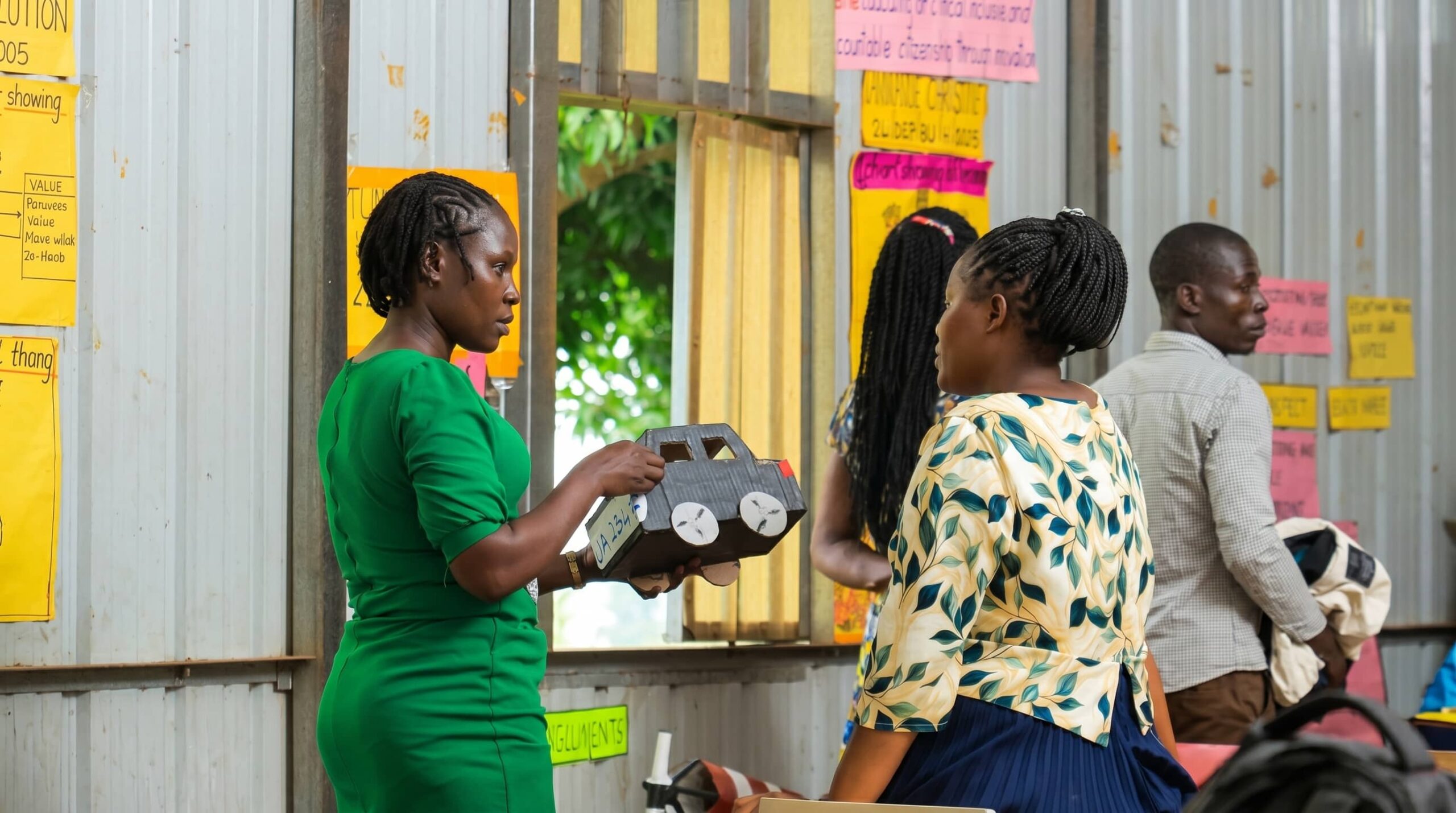
In-service teachers at Bugema University, under the Institute of Professional Growth (IPG), have demonstrated how everyday local materials can be transformed into powerful teaching aids during a recent Educational Technology Display held under the theme “Educating for Ethical, Inclusive and Accountable Citizens through Innovation.”
The display, mounted by Year Two students pursuing the Educational Technology course, brought together a wide variety of teaching materials made from locally available resources such as banana fiber and grains. Through colorful, hands-on exhibits, the trainee teachers showed how items often dismissed as ordinary household or agricultural products can be repurposed into instructional tools that make abstract concepts visible, tangible and memorable for learners.
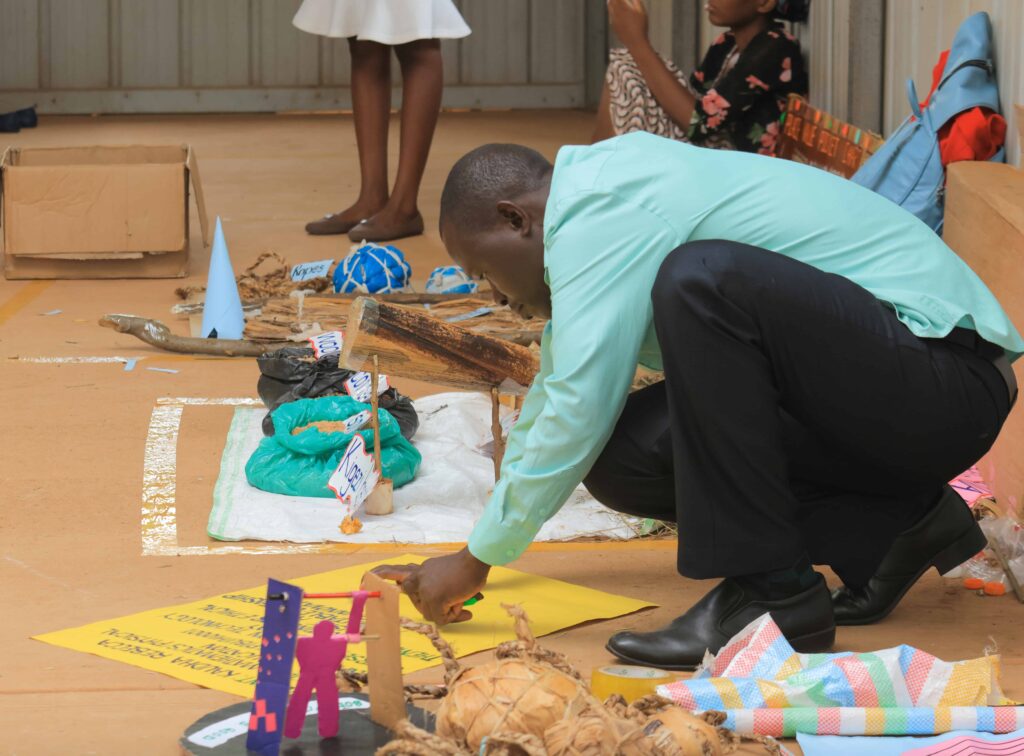
Inservice Student Presenting his work
The exhibition was designed to challenge a long-standing assumption in the education sector that meaningful classroom learning depends solely on access to modern, and often expensive, technology. Instead, the IPG team used the platform to remind both pre-service and in-service teachers that creativity, observation and resourcefulness are equally valuable tools in any classroom, especially in rural and under-resourced schools where digital equipment may be scarce or completely unavailable.
Speaking during the event, one of the facilitators, Madam Nakiwala Danna, emphasized the importance of grounding teaching practice in the learner’s immediate environment. “Learning can also be done with local materials and not only technology,” she said, adding that such an approach makes lessons more relatable, more affordable and more inclusive. She noted that when teachers draw from what learners can already see, touch and recognize from their day-to-day lives, the journey from classroom theory to real-world application becomes much shorter.
Madam Nakiwala further explained that the Educational Technology course is deliberately designed to build the trainee teacher’s confidence in improvising. Whether using banana fiber to model the structure of a plant cell, or grains to teach early counting and arithmetic, the goal is to equip teachers with skills that work in any school setting, whether in a well-funded urban institution or a remote village classroom with limited supplies.
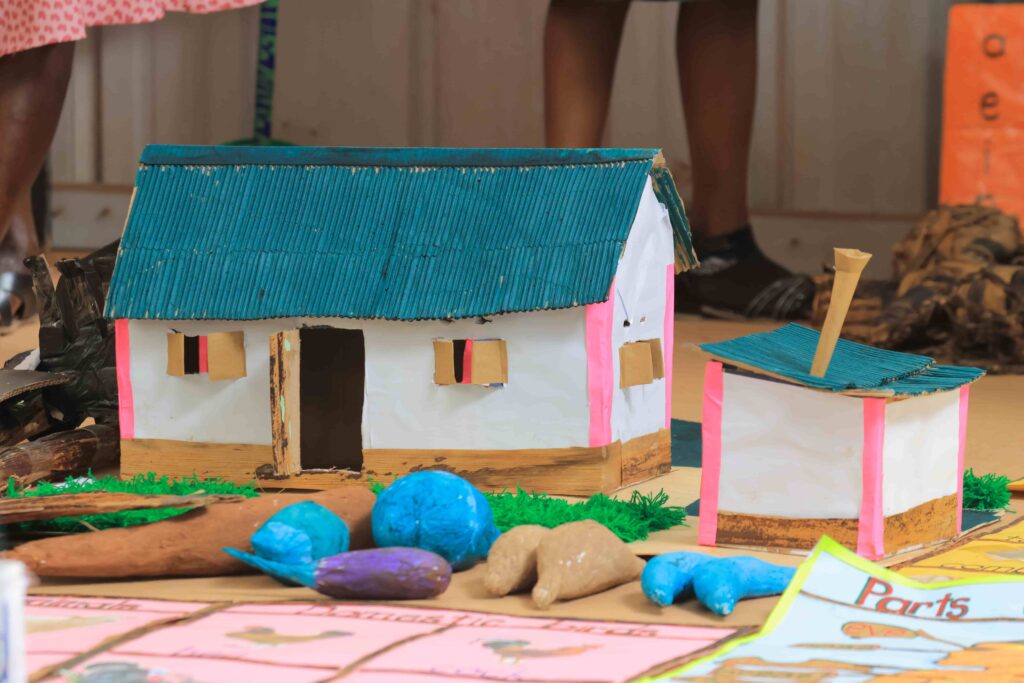
Some of the good work made by Inservice Students
The hands-on nature of the exercise drew enthusiastic feedback from the trainee teachers themselves. Tusiime Lilian, one of the participating students, described the experience as both “cool and exciting.” She explained that because the materials are sourced locally, they are easy to access, easy to replace and easy to adapt for different age groups and subjects. According to her, this makes the learning process not only practical but also genuinely inclusive, as no learner is left behind for lack of imported or expensive teaching aids.
“The process has empowered me with knowledge that I can pass on to my own learners,” Tusiime said, noting that the skills gained will be especially useful as she prepares to head out for her second school practice. She added that her experience at the display has reshaped how she views her role as a teacher from a person who delivers content, to one who creates learning experiences out of the resources available within the community she serves.
The Director of IPG, Madam Basemera Collins, reaffirmed the institute’s commitment to ensuring that lessons learnt during such activities translate into real, measurable classroom practice. She revealed that supervision of student teachers during school practice goes well beyond a routine tick-box assessment. Supervisors deployed by IPG actively look out for evidence that trainees are applying the innovative, locally grounded approaches they were exposed to at Bugema University.
“When we go out to supervise them during their school practice, we check whether they are really transferring that kind of knowledge to their classrooms,” Madam Basemera explained. She emphasized that this follow-up loop is what gives the training programme its credibility, ensuring that innovation does not end at the exhibition tables but instead flows into the lessons that real children sit through every day.
The Educational Technology Display reflects Bugema University’s broader commitment, through IPG, to producing teachers who are not only academically grounded but also ethically responsible, inclusive in their approach, and innovative in their methods. By encouraging trainee teachers to look around their immediate environment for teaching resources, the institute is preparing a generation of educators who can deliver quality lessons regardless of the resource constraints they may face once posted to the field.
The exhibition closed with a call from facilitators for trainees to keep building on the spirit of innovation both during their upcoming school practice and throughout their teaching careers so that the values captured in the theme of ethical, inclusive and accountable citizenship are passed on to the next generation of Ugandan learners.





1 comment on “Bugema University In-Service Teachers Showcase Innovation Using Local Materials at IPG Educational Technology Display”
This display is a fantastic showcase of practical, resourceful education! It is inspiring to see Bugema University’s in-service teachers demonstrate how everyday, low-cost resources like banana fibers and grains can be transformed into effective teaching aids. This initiative proves that high-quality learning doesn’t always rely on expensive modern technology, but rather on teacher creativity, making education far more accessible, relatable, and inclusive for schools in under-resourced communities.
bbe